
What do you do when your service is brilliant, but your customer doesn’t know they have the problem it solves?
You stop selling to everyone and start selling to someone.

Last Friday I had coffee with a friend, and he showed me an app he developed. The product is brilliant. The value is obvious to anyone who sees it. The experience is smooth. It could be a home run.
One problem: his customers don’t know they need it.
The app solves a real problem for three different groups of people. But none of them are sitting at their desks right now thinking “I wish someone would fix this.” They don’t feel the pain. They don’t search for a solution. They have no idea the problem exists.
So how do you sell something nobody knows they need?
Conventional wisdom says you should spark curiosity. Run ads. Write content. Make people aware of a problem they didn’t see. I tried this for years. And after a lot of experimenting, I’m fairly confident it doesn’t really work. Convincing someone they have a problem when they think they don’t is just not something natural. People resist it. It feels like being told what to think.
So here’s what I told him.
Stop trying to sell to everyone. Find the right someone.
In every group of potential customers, there are people who like to be first. Who like to improve and optimize. Who are open to trying new things. Not because they feel a specific pain, but because they’re wired to look for a better way. Talk to them. Talking to the rest, at this stage, is a waste of time.
This is exactly what Apple did in 2007.
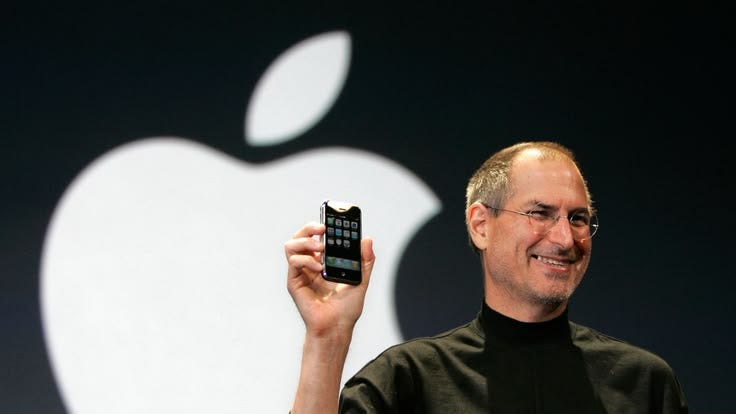
Before the iPhone, nobody was walking around saying “I need a touchscreen computer in my pocket.” People had phones. They had iPods. They had laptops. They were fine. There was no mass pain. No widespread frustration Apple could point to and say “see, you have this problem.”
So Apple didn’t try to convince the whole market. They launched in Apple Stores and AT&T locations, put the phone in people’s hands, and let early adopters do the rest. 270,000 units sold in the first two days. Most of them to people who camped outside stores overnight. People who didn’t need convincing. People who loved being first.
One million sold within 74 days. And from there, the rest of the market followed.
Apple didn’t educate the mass market into wanting a smartphone. They found the people who were already looking for the next thing and gave them something worth trying.
Now make them an offer they can’t ignore.
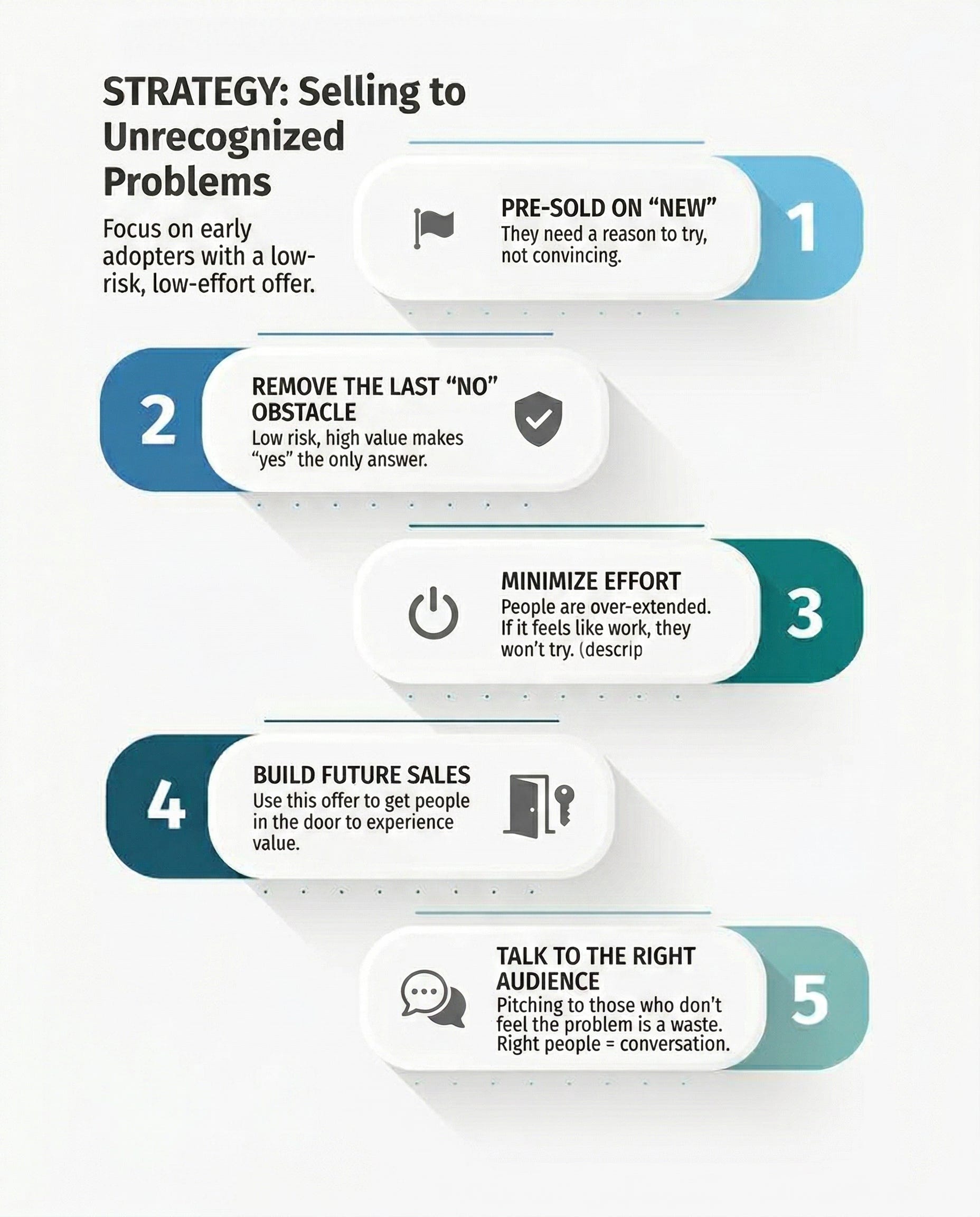
Once you’ve found the right people, you need to make them an offer that is low risk, low effort, and high value. A smaller, lower-risk version that lets people experience your value before committing to the full thing. I call these “door offers.” Because they open the door.
Here’s why this works:
• People who like to try new things don’t need convincing. They need a reason to try yours next. That’s a very different conversation.
• A low risk, high value offer removes the only thing standing between them and a yes. If they lose nothing by trying, they will try.
• Low effort means it actually gets used, not just bought. Early adopters are already juggling ten experiments. If yours requires onboarding, setup, or learning, it goes to the bottom of the pile. If it takes five minutes, it gets tried today.
• Once someone experiences value firsthand, the next offer sells itself. You’re no longer arguing that a problem exists. You’re talking to someone who has already felt the solution. That’s the easiest sale you’ll ever make.
• Early adopters talk. They tell people. They post about it. They become your sales force before you’ve spent a cent on marketing. That’s how the rest of the market finds out they had a problem in the first place.
My friend’s app is not launched yet, so I can’t share details. But the playbook I gave him is the same I’d give anyone sitting on something great that solves a problem people don’t know they have: find the people who love being first. Make it easy, low risk, and so valuable they can’t say no. Let the product do the convincing from there.
And since everyone is so crazy about infographics (didn’t see that coming at back at university), here’s a neat one for you:
P.S. The iPhone was $499 when it launched. Two months later Apple dropped the price by $200. The early adopters were furious. But by then it didn’t matter. They’d already opened the door for everyone else.
Love Coffee with friend